
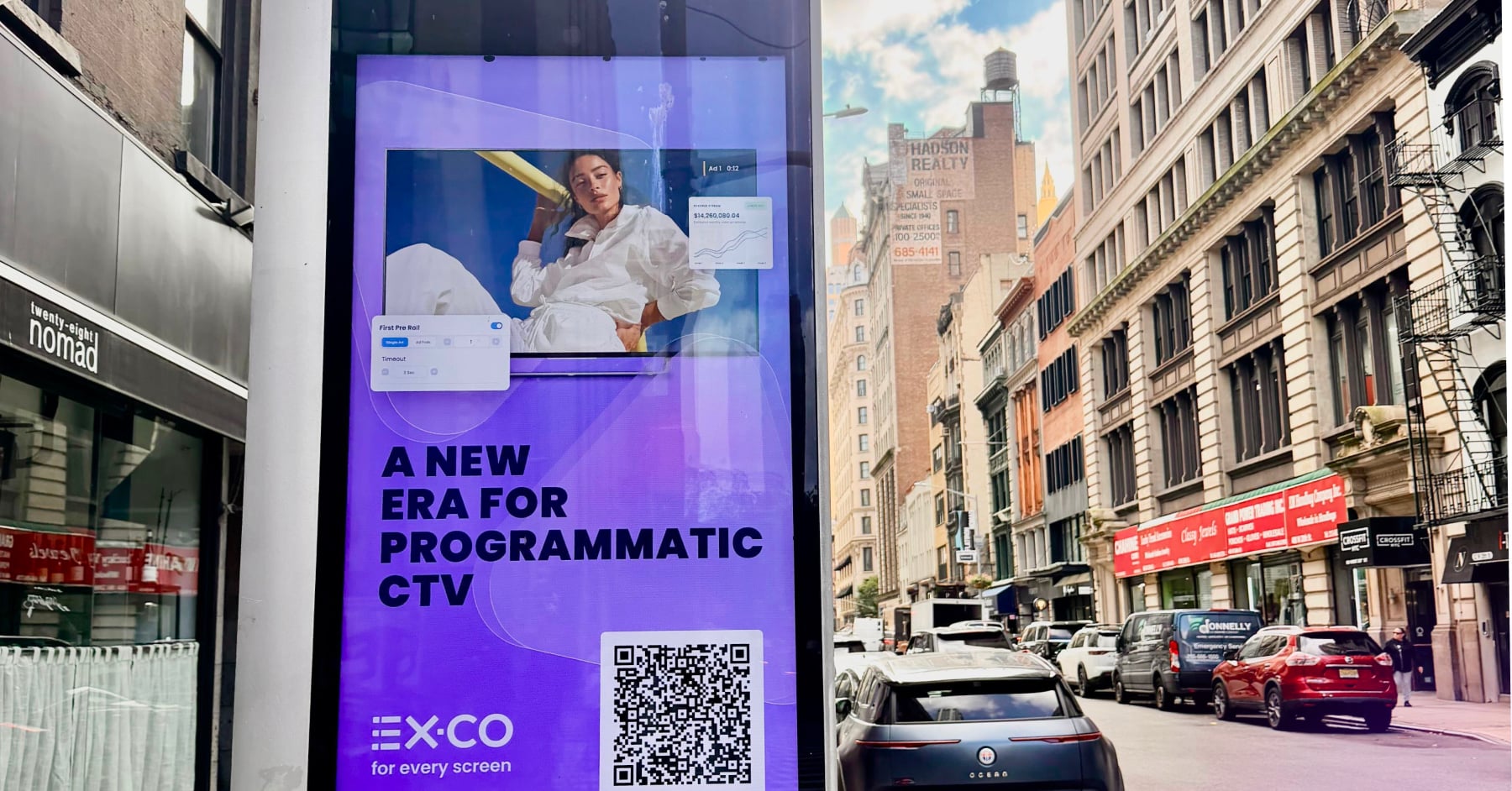
Advertising Week New York 2026 (October 5–8) put creators on the main stage. Off stage, the talk was about how media will be bought next: by AI agents, across converged plans, with proof attached (StreamTV Insider). Here are the five signals we heard, and what they mean for publishers.
Five signals from the week
1. Agents are starting to buy media, and they'll pick supply that's easy to read
Agentic buying moved from slides to live demos. Independent agency InterMedia now runs the bulk of its programmatic buying with AI agents, and Vibe says over 1,000 brands use its MCP integration (Cynopsis). It's still early: one ad tech leader told ADWEEK they see few agent requests so far (ADWEEK).
Our take: An agent doesn't take a publisher to lunch. It reads signals: clean supply paths, accurate sellers.json and ads.txt, reliable viewability and completion data. Messy video supply will be skipped quietly.
2. The open web is under pressure, so every visit has to earn more
ADWEEK reported that AI tools are taking a growing share of publisher traffic, putting the open web under real pressure (ADWEEK). Apple's Safari changes added to the strain (Digiday).
Our take: With flat traffic, revenue per session is the number that matters. Video is most publishers' highest-yield format, and Google's sticky-video change on October 22 opens new options. Owning your player and ad server limits the damage from someone else's policy change.
3. Proof is now the entry ticket
VAB CEO Sean Cunningham: "Every advertiser is saying their baseline expectation is proof metrics" (The Current).
Our take: Proof now means live data on who watched, for how long, and what each impression earned. A video stack that shows that per placement, in seconds, wins the buyer conversation.
4. Convergence: one buy across TV, CTV, creators and the web
Strategus CEO Todd Porch: "CTV, streaming, creators, commerce, social and retail media are increasingly operating in one connected ecosystem" (The Current).
Our take: Publisher video has to show up in that single plan, with web and CTV packaged and measured so buyers can compare them.
5. Brands want to sit inside content, not interrupt it
On stage, Trevor Noah pointed to brands moving away from ad breaks and toward sponsorships and integrations inside the shows themselves (Cynopsis).
Our take: Publishers already own what brands are chasing: trusted content and an audience that came on purpose. Video that matches the article and plays as content is where premium demand goes (more on that).
What publishers should do before 2027 planning
- Clean up your video supply path. Accurate sellers.json and ads.txt, as few hops as possible.
- Make proof available on demand. Completion, viewability and revenue per placement.
- Manage to revenue per session. Find pages where video is missing, and test sticky formats after October 22.
- Plan web and CTV together, and match video to content.
The bottom line
Advertising Week 2026 was about buyers: new tools, converged plans and a demand for proof. Video sits at the center of all five signals, and the publishers who adapt their supply now are the ones buyers will choose next year.
Want to see where your video revenue stands? Talk to the EX.CO team about a free yield review.